Reference-level Surround Speaker
Constraints:
Industrial design, drivers, and horn geometry set by technical director
What I owned:
Product mechanical design including DFM/DFA, novel tweeter horn, and titling/swiveling wall bracket.
All prototype fabrication using production equipment.
Manufacturing development including CNC programming for production, designing and building tooling and jigs, and SOPs.
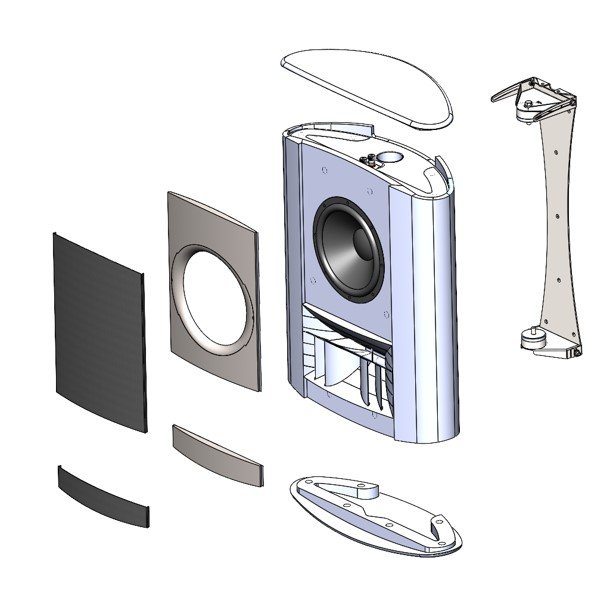
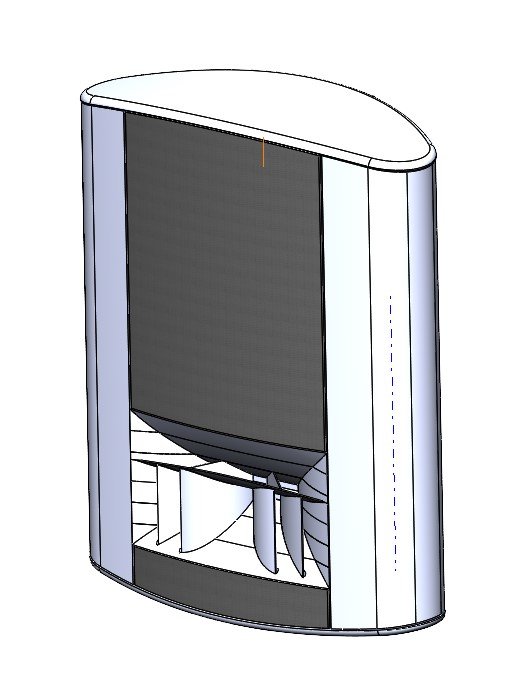
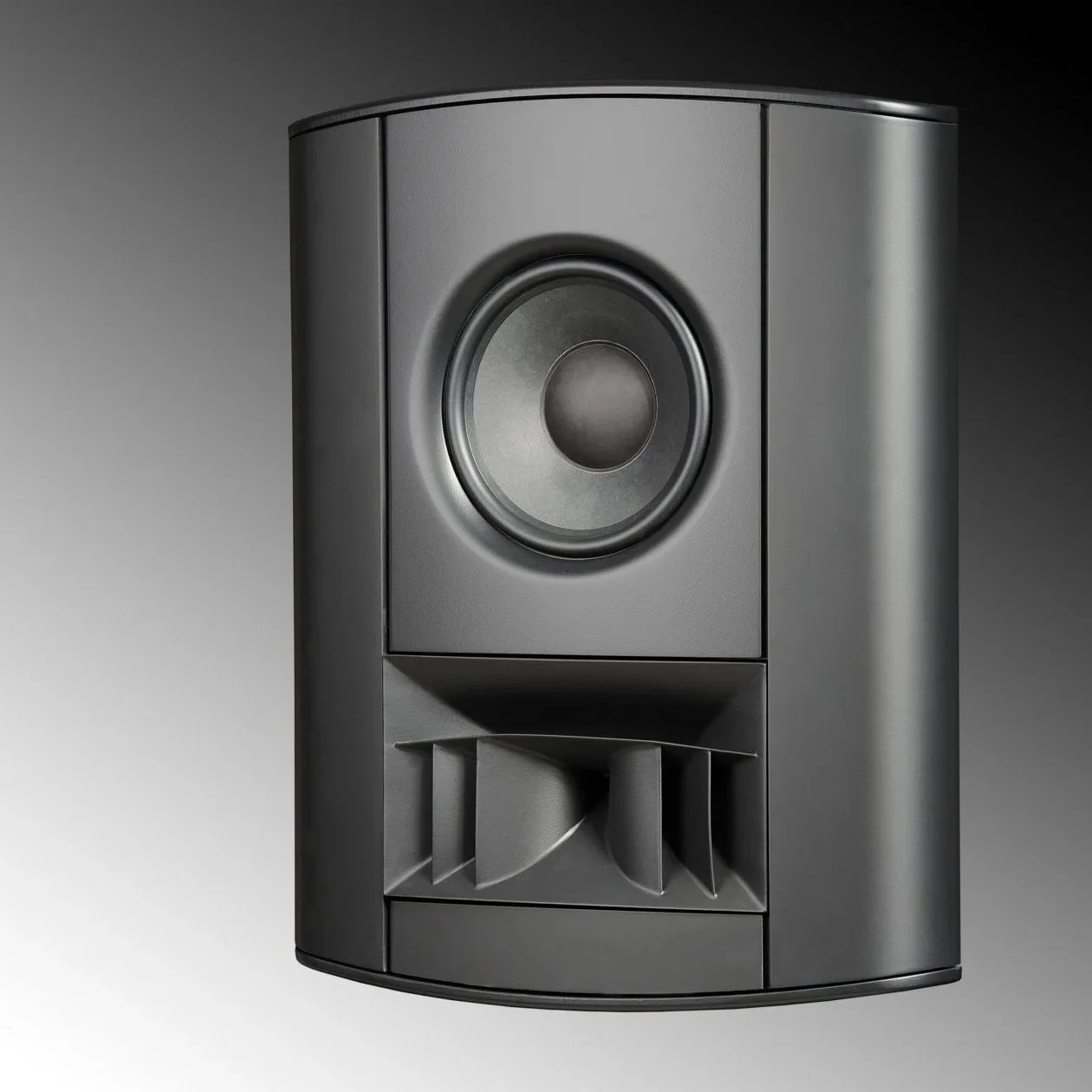
I designed three versions of the horn before one fit the business.
The first divided the horn into three molded parts — two horn halves and a center waveguide section. Tooling quoted at roughly $10,000. With no capital available and volume expected to stay low until the full system shipped, it couldn't be justified. Unit cost was not the constraint: at $70 per unit against a $5,000 retail price, per-unit cost had little bearing on the decision.
The second built the waveguide from Formica, CNC cut, heat-bent to shape, and glued into two machined halves. It produced acceptable parts but consumed more shop labor than we could sustain at our staffing level.
The third replaced the Formica with aluminum vanes formed by a local sheet metal shop at approximately $70 per set — no tooling investment, no minimum order, no overseas lead time.
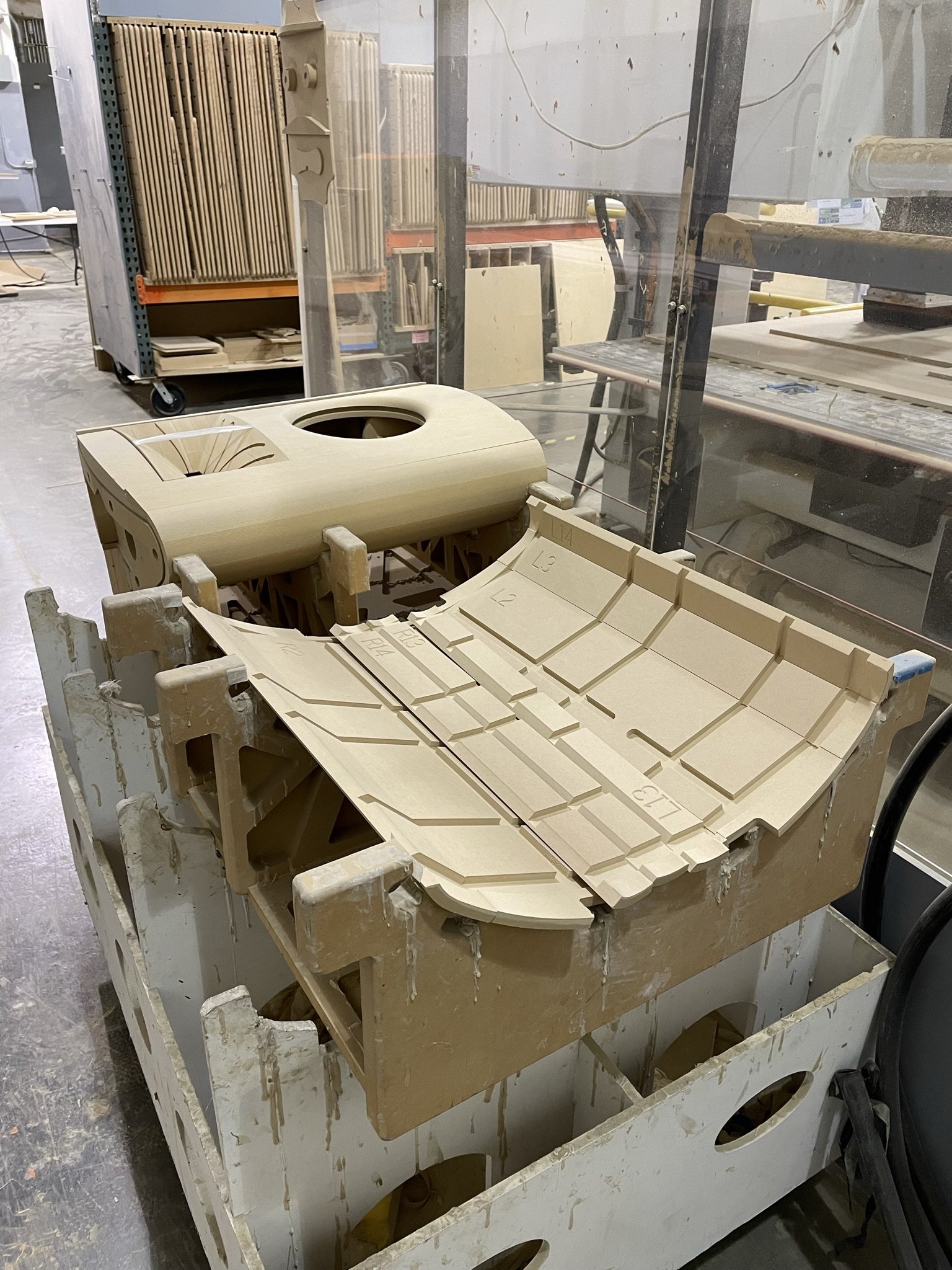
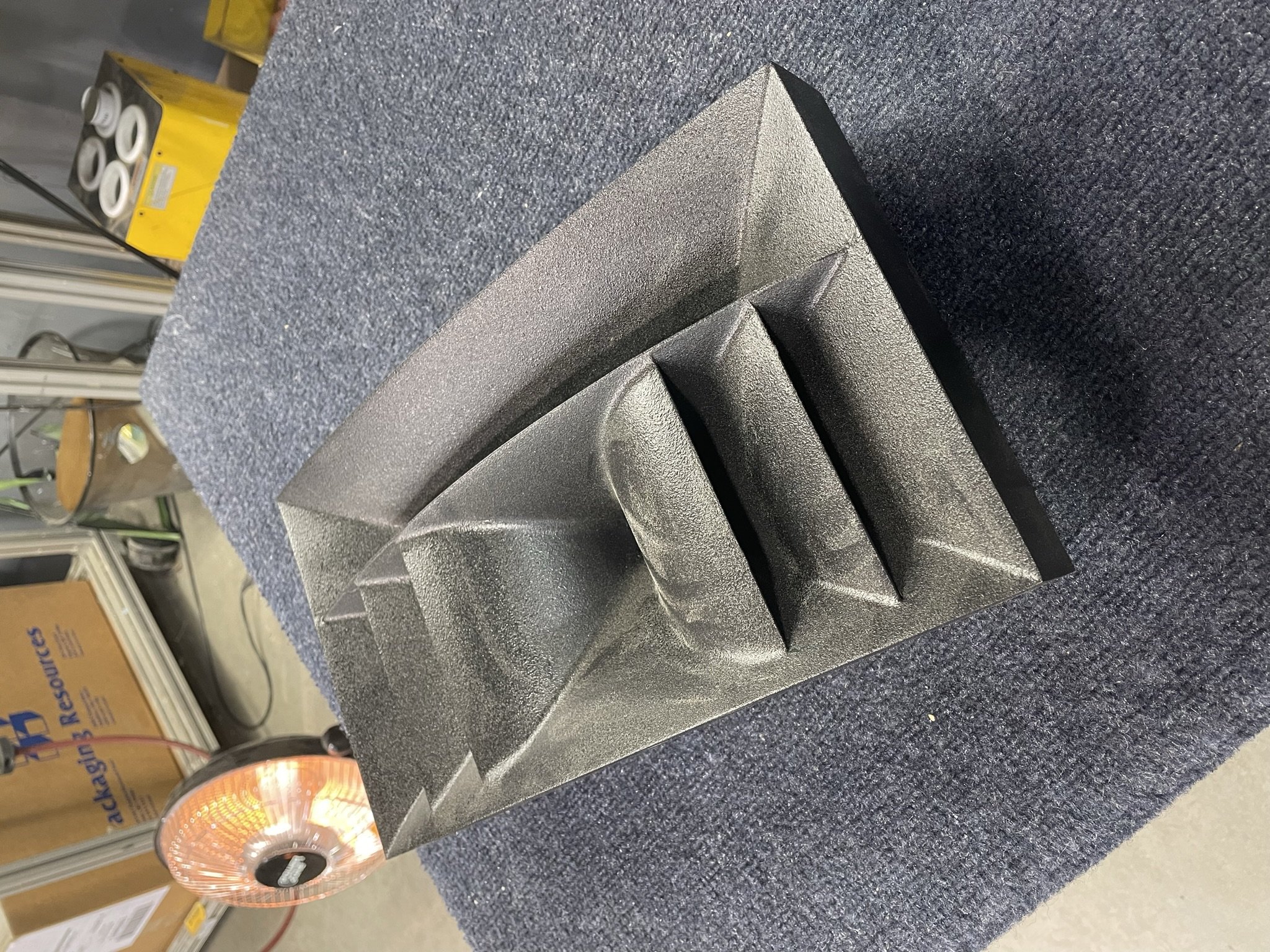
The production part is a stack-up of laminated MDF, 3D machined to the horn profile in two halves. The aluminum vanes are bonded in with wood glue and the halves pinned with hardwood dowels. Seams are filled with Bondo, sanded, and painted so the assembly finishes as one uniform surface.
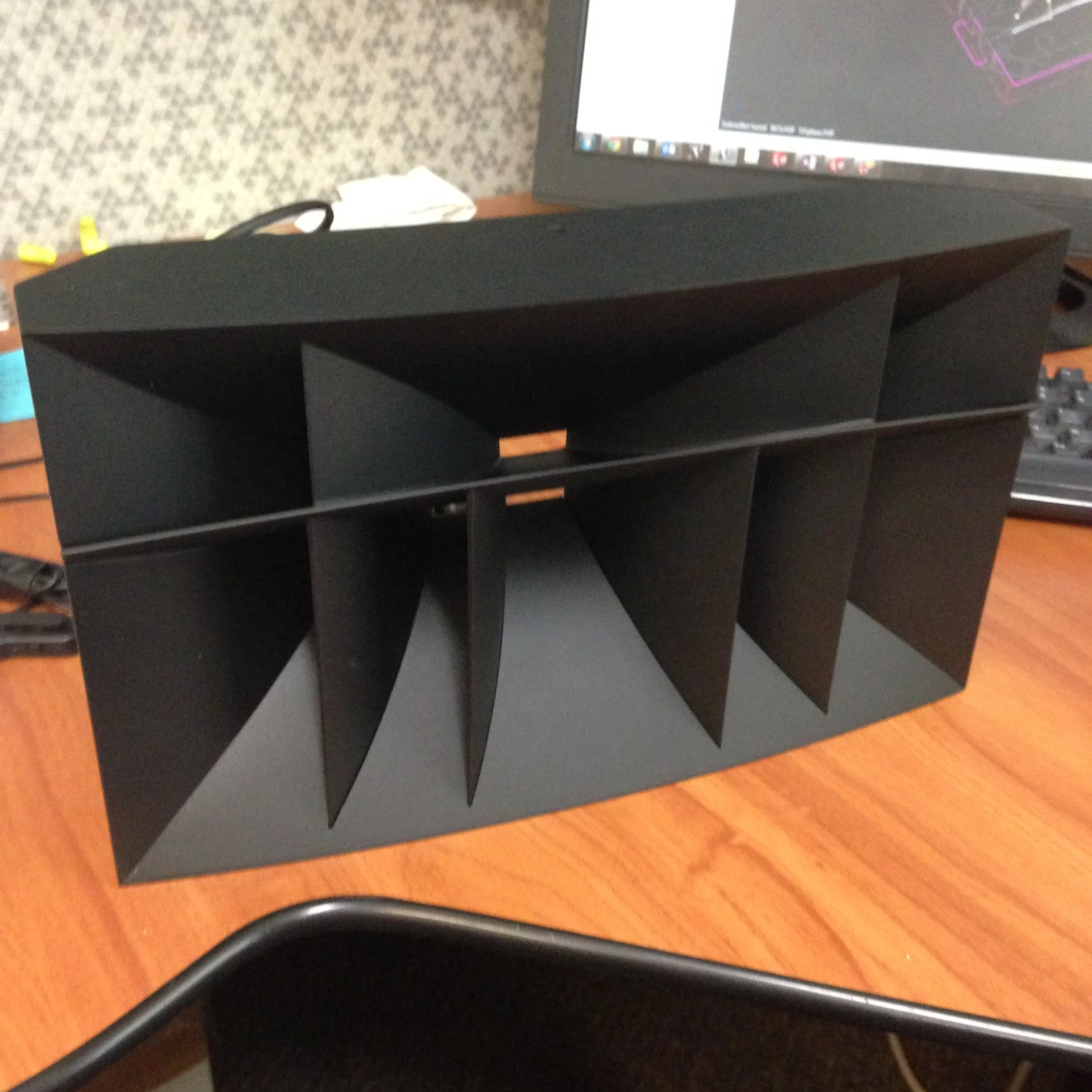
3D printed positives for casting.
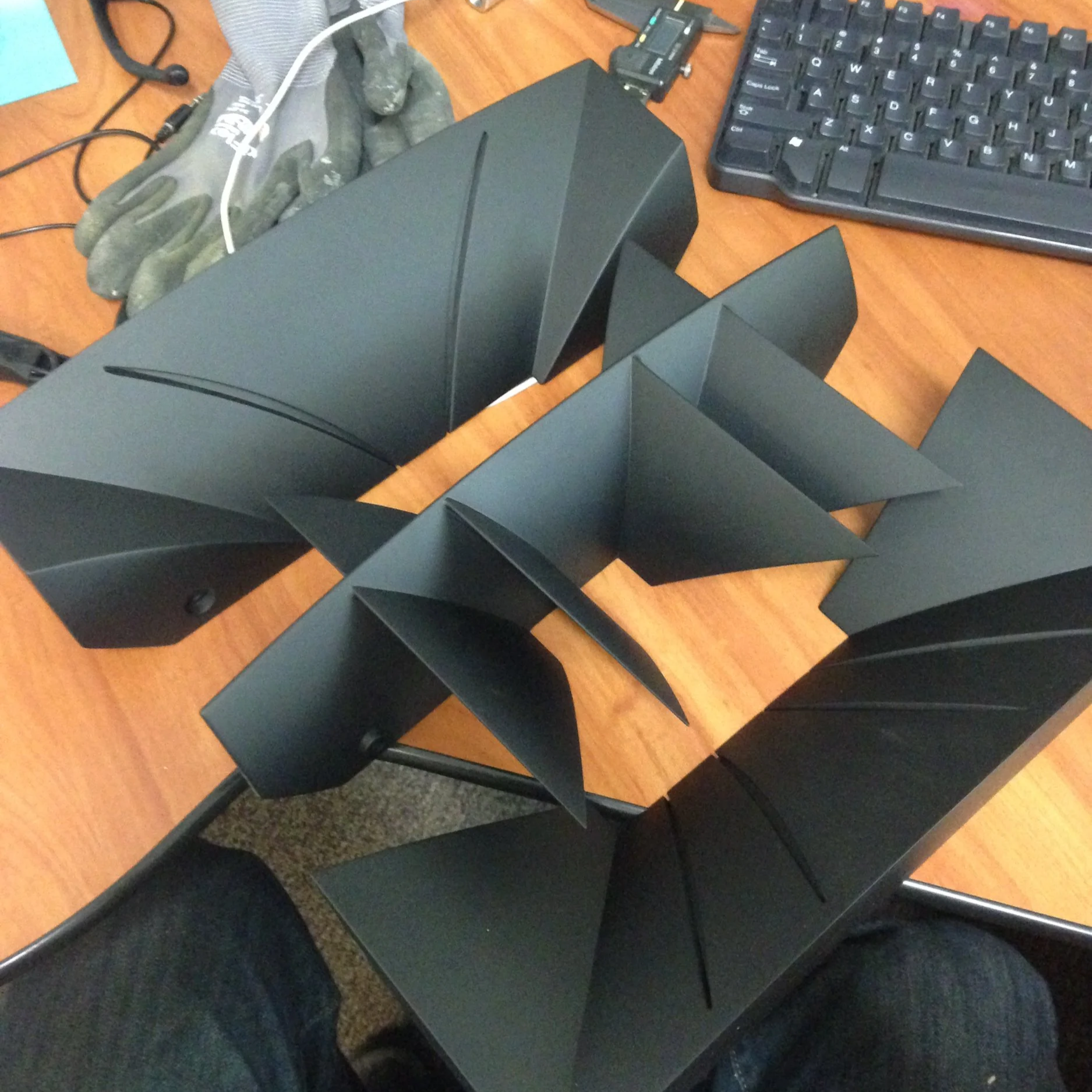
Prototype of MDF horn with formica waveguide
-
![]()
Enclosure being assembled in glueing jig
-
![]()
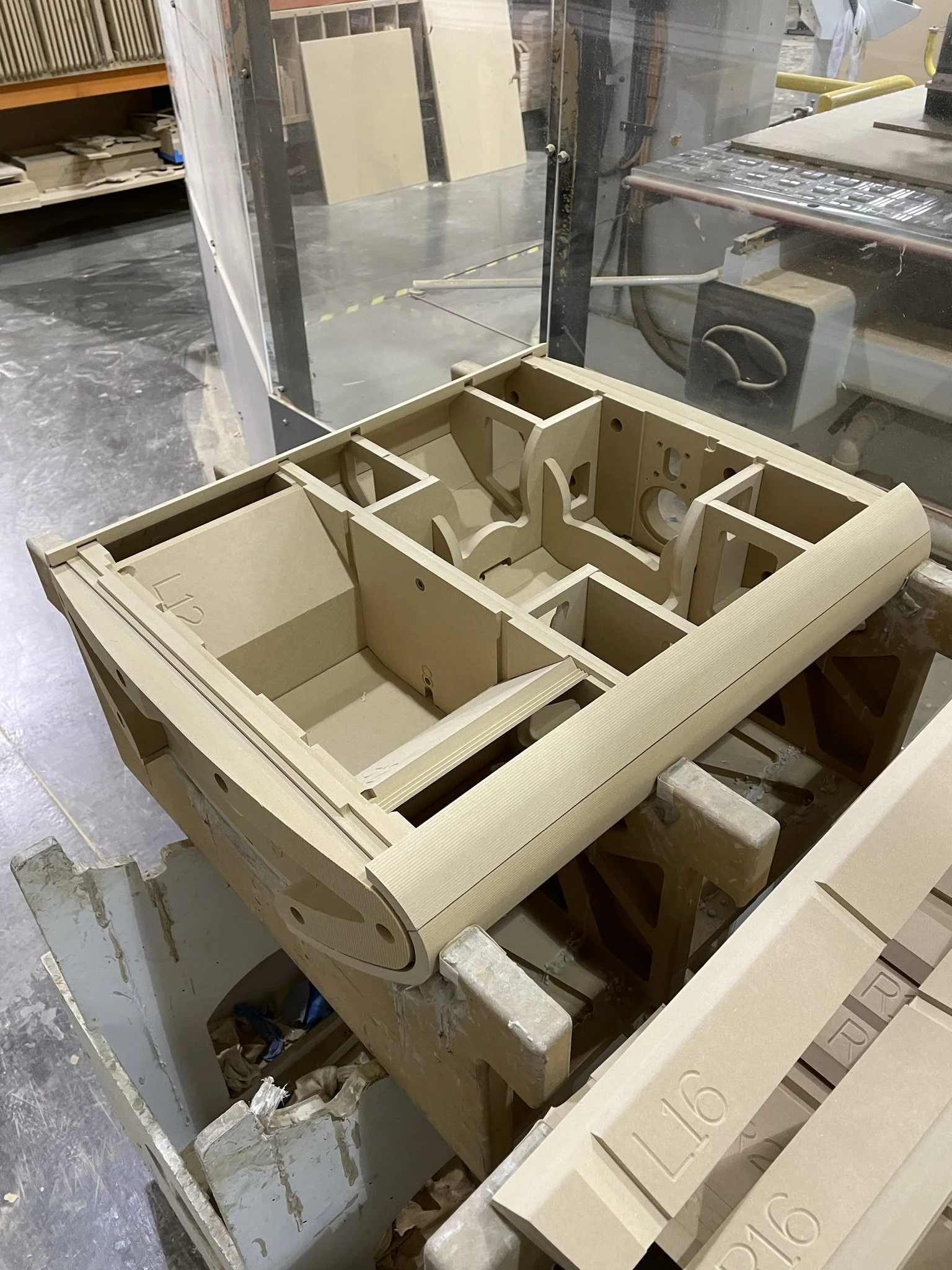
Enclosure assembly showing interior
-
![]()
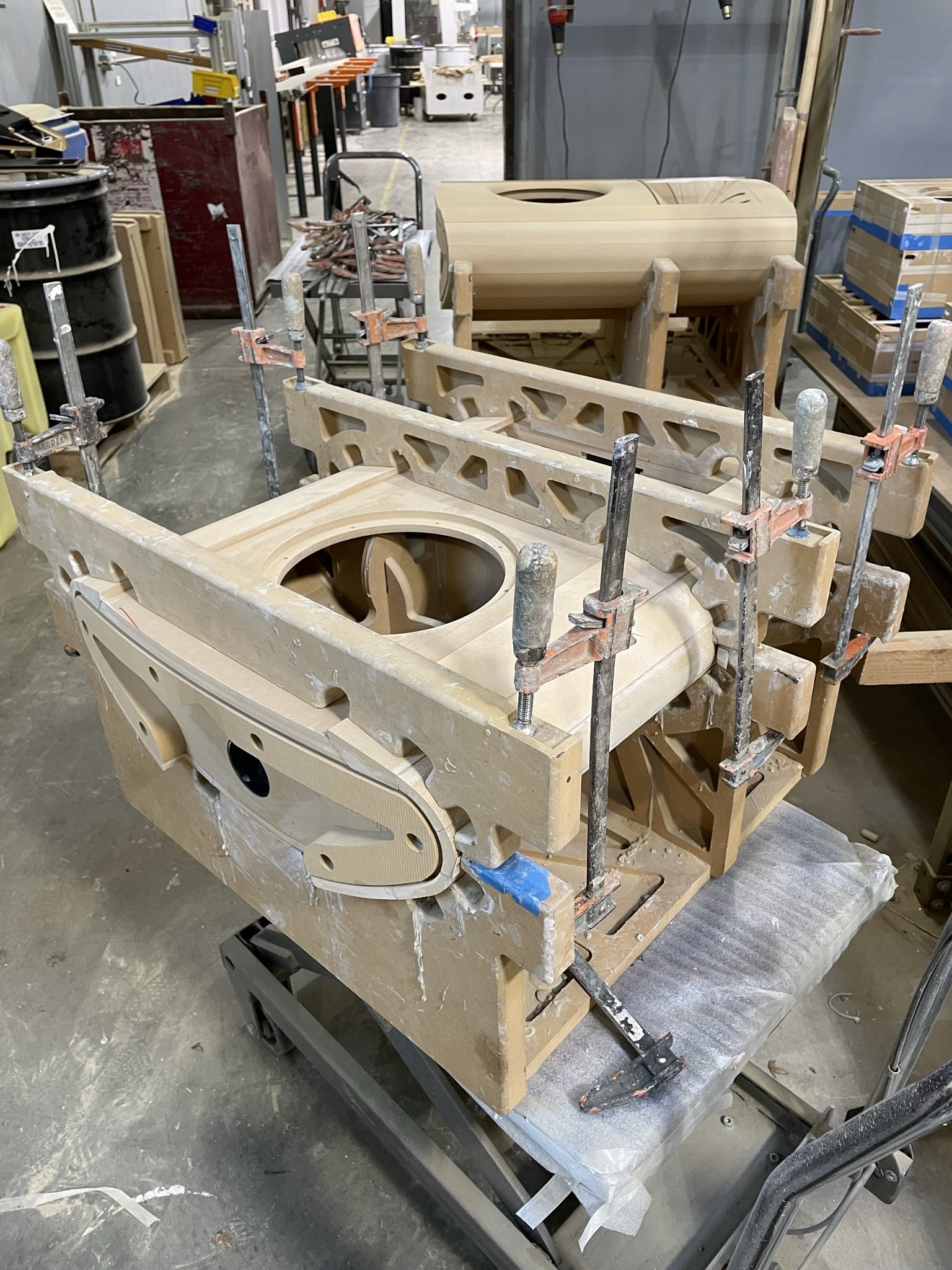
Enclosure clamped in custom jig
-
![]()
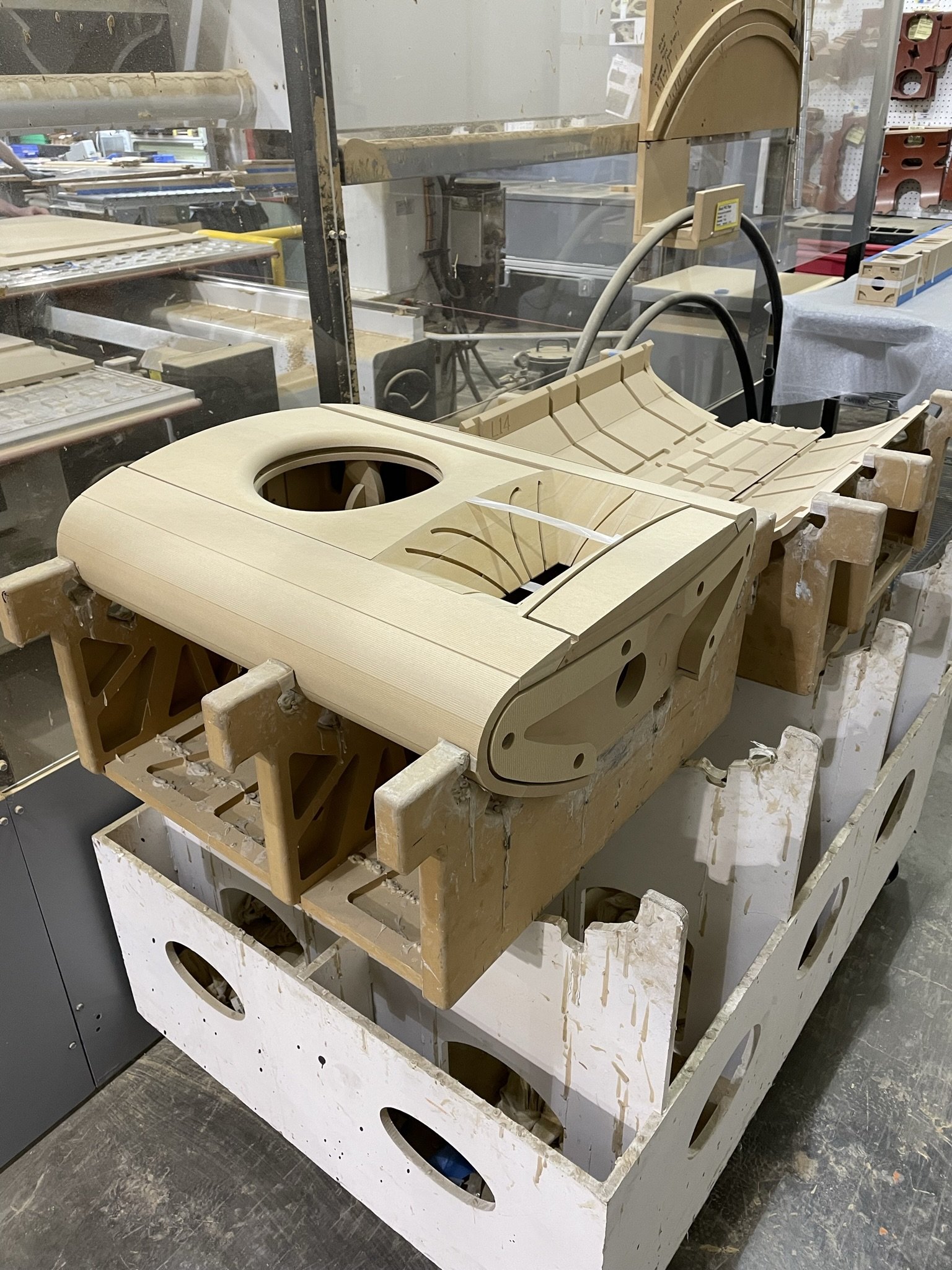
Completed unfinished enclosure